“Maurice H. Dobb’s Wages (1928-1974): A Cambridge Handbook Against the Standardization of Knowledge?”
François Allisson and Cléo Chassonnery-Zaïgouche, Centre Walras-Pareto, Université de Lausanne
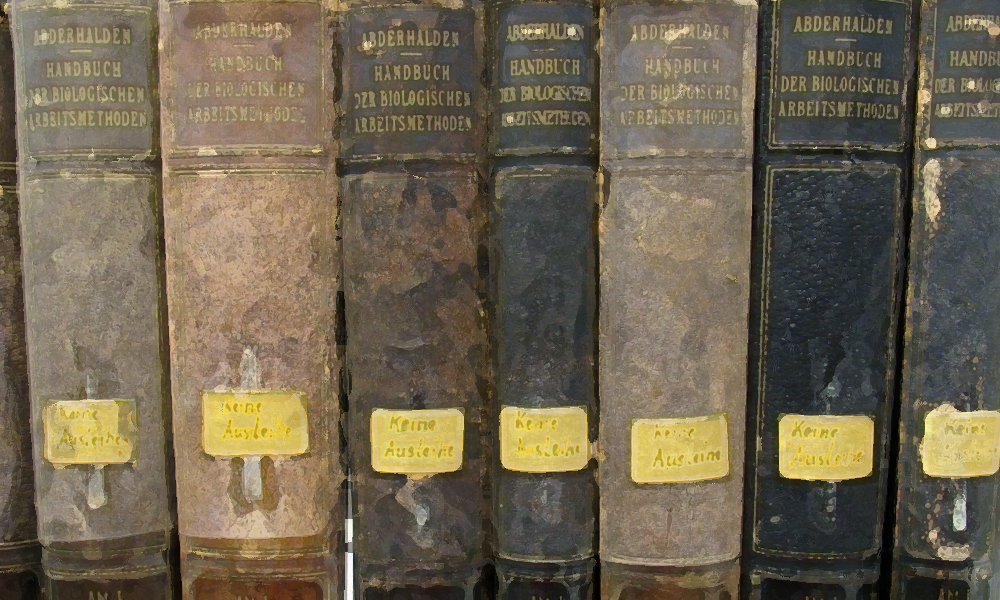
In 1928, Maurice H. Dobb wrote a short—222 pages—Cambridge Handbook entitled Wages. It underwent several reeditions, translations and reprinting until the 1970s, while economics, and especially labor issues, experienced a shift from an interwar pluralism to the post-WWII rise of neoclassical dominance. If handbooks are not always—and indeed rarely—full of innovations but rather a collection of stabilized and maybe standardized knowledge of a specific time, Dobb’s handbook on wages is yet from another kind. Through the modifications he applied to his text during four decades, it should be considered as a tentative to resist the standardization of knowledge within the field. The paper traces this evolution, focusing on Dobb’s recording of the theoretical and empirical shifts within economics, the formal and visual changes he adopts in the making of the handbook, and the changes in readership.
“’A Few Plain Instructions for Collecting:’ Nineteenth Century Botanical Collection Manuals in the Service of Empire”
Elaine M. Ayers, Princeton University
Written in 1849, John Herschel’s A Manual of Scientific Enquiry offered British travelers, usually under employ of the Royal Navy, a step-by-step guide to observing, collecting, preserving, and shipping natural objects at the far reaches of the empire, ranging from rare minerals to palm trees. With contributions from the nation’s top natural historians and philosophers—including Charles Darwin, William Whewell, and William Jackson Hooker—the manual was designed to be “plain, so that men merely of good intelligence and fair acquirement” should be able to use it, and none of its contents required “the use of nice apparatus and instruments.” This natural historical guidebook represented a rapidly growing genre of scholarship in the mid-nineteenth century British Empire suddenly faced with a wealth of overseas collectors and a dearth of proper training in how to transform a natural object in the field into a scientific specimen back at home. The answer, for naturalists managing collections at museums and gardens, was affordable, step-by-step instruction manuals, written in plain language and small enough to be folded into pockets, rebound, and taken on board ships and out into rainforests.
Using a series of such collecting manuals held in the archives of the Natural History Museum (London) and the Royal Botanic Gardens, Kew (many of them hand-annotated and revised), this paper untangles the management practices at work in processing, naming, and ordering tropical rainforests back in Britain. Teaching an untrained sailor how to identify and properly preserve a rare orchid for placement in an herbarium from a humid, chaotic, unfamiliar place—all in a five-page, unillustrated booklet—required immense strategy in communication and in scaling down complex processes subject to constant feedback and revision.
“Handbooks of the Mind in to Ready Reckoners in Print: The Story of the Encuvati in the Nineteenth Century”
D. Senthil Babu, French Institute of Pondicherry and the Max Planck Institute for the History of Science, Berlin
The Encuvati was the quintessential Tamil table book, used in pre-colonial south Indian schools. These were records of pedagogic practices in the learning of arithmetic, rendering proficiency in the computation of numbers, weights and measures. The Encuvati as a mnemonic device, residing in the mind and kept as a handbook in palmleaves transformed into diverse forms assuming different use values for different practitioners, with the onset of colonial rule in south India. It became a manual outside the school while inside, it was integrated into the modern textbook of arithmetic, radically altered, often accompanied by a problem solving exercise section called Bazaar Arithmetic. Its transition through the 19thcentury encapsulates a social history of learning, counting, weighing and measuring through a changing regime of numbers in colonial South India.
“Re-Enactment of Functional Reading in Eighteenth-Century
Gold- and Silversmithing”
Tonny Beentjes, University of Amsterdam
Thijs Hagendijk, Utrecht University
The early modern period witnessed a great increase in artisanal handbooks, manuals and recipes. A central question is what role these texts played in the transmission of artisanal knowledge. This paper explores the case of Dutch silversmith Willem van Laer (1674-1722), who published a Guidebook for upcoming gold- and silversmiths (1721). Beentjes and Hagendijk have performed historical re-enactments (of the educational context of the Guidebook) – informed by historical research and expertise from the field of conservation and restoration – to understand what role the Guidebook played in the acquisition of practical skills, and assess how the historical study of artisanal sources contribute to the field of conservation and vice versa.
The near-complete description of skills and techniques in the Guidebook is unparalleled compared to earlier sources, while its didactic voice means that it can be considered one of the first manuals of the craft. The book circulated among professional craftsmen; yet concrete evidence of historical usage is scarce. The ethnographies that arose during the re-enactments further testified to its role in the education of a novice, under supervision of conservator and trained gold- and silversmith.
Re-enactments of casting and soldering demonstrated that the book should not be considered a DIY crash course, since it presupposed preliminary understanding of materials and techniques. Instead, Beentjes and Hagendijk suggest that the Guidebook played a supportive role in apprenticeship learning, because it helped to formalize craft knowledge at a time when learning was mainly driven by the tasks and work at hand, rather than by pedagogical considerations.
“Making Manuals in the Arts”
Jenny Boulboullé, Utrecht University
Building on book history and material culture studies, this paper takes a hands-on approach to the study of manuals and argues for the importance of a manuals’ material aspects to understand the history of its making, its uses and its reception. Jenny Boulboullé’s paper focusses on a case study from the early modern period: the manuscript compilation MS Sloane 2052, better known today as the ‘Mayerne Manuscript’. Her paper traces the ‘cultural biography’ of this unique collection of loose notes, written in many hands in a mix of European vernaculars and Latin, that was compiled by and for the royal physician Theodore de Mayerne in London between ca. 1620-1646, but was only published in print in the long nineteenth century. In the course of the last century it has gained fame as an indispensable handbook for the study of seventeenth-century art technologies, in particular Netherlandish oil painting techniques. It saw many editions and translations, many of which are currently used for teaching and research in conservation and technical art history to study historical making processes of Northern European Art. Paradoxically, this famous source text has itself rarely been studied as an early modern artefact. Its recent digitization facilitates visual analysis of its original folios. Boulboullé will present close readings of selected folios that exhibit an intriguing range of art and writing technologies. Visual inspection of the original pages shows how the compiler turned folios into sites of manual experimentation, and reconstruction research of these experiments reveal a systematic exploration of handling properties of self-made inks and colorants. Boulboullé will use examples from her study of the ‘Mayerne Manuscript’ to discuss the heuristics of reconstruction/re-performance research as a complementary method in handbook studies, and more generally in interdisciplinary research in art history, material culture studies, and history and philosophy of science.
“The Romantic Vade Mecum: Supplementary Descriptions Of Sir John Soane’s House And Museum”
Marianne Brooker, Birkbeck College
This paper explores the implications of encountering the museum of the Royal Academy architect Sir John Soane (1753–1837) with, through, and against its diverse textual descriptions. Brooker will focus on The Description of the House and Museum of 1835, co-authored by Soane and the novelist Barbara Hofland. Here, Hofland’s ‘pictorial and poetical’ remarks are ‘embodied’ with Soane’s: readers are taken so far along a route by one author, and then back to retrace their steps with another. Existing scholarship fashions the museum as a form of autobiography which ostentatiously cultivates its collector’s fame, and relegates Hofland to the anonymity and passive impressionability of an ‘authoress’. Brooker argues that the 1835 text as an actively collaborative work which decodes and envisions the space by imaginative and contrasting means. She will situate the Description within a context of earlier manuscript drafts and unpublished letters, and later published versions. Each of these instantiations negotiate the ‘plethoric compendiousness’ of the collection, and the divide between public document and private account, very differently.
Soane and Hofland’s collaboration is illustrative of the mechanisms, and the speculative experimentation, with which guidebooks of the period gesture towards and organise a space outside of the text ‘at hand’. Brooker uses the 1835 Description to outline and theorise the disaggregated, but nonetheless interactive and intertextual genre of the vade mecum (literally, ‘go with me’). Such texts engage directly with hierarchies and dynamics of reference and supplementary to produce a poetics of accompaniment. The vade mecum is not only fundamental in conditioning different ways of seeing in and around (or in the absence of) the museum, but also in disseminating knowledge which has moved beyond the voluminous heft of enlightenment encyclopaedism, to reside instead in portable pocket-books, composite guides, and other such works of reference more readily available to wide readerships.
English Preaching Manuals, Clerical Expertise and the “Learned Ministry,” 1570-1660
Simon Brown, University of California, Berkeley
The theological dissension opened by the English Reformation cast fundamental doctrinal principles and common pastoral practices into controversy. The English Church fissured over debates about the clergy’s obligation to preach and the proper education for the office. Following this controversy, clergymen published a raft of preaching manuals as both guides for the construction of effective sermons and as implicit answers to these divisive questions. The authors of these manuals took up questions from the “Art of Preaching” literature to provide a vision for the role preaching plays in Protestant theology, and to convey the expertise that ministers required to discharge it.
This paper examines this literature to show how their answers to these theological questions provided an innovative model of clerical expertise for the ministry and a novel epistemology of doctrinal knowledge for the laity. Manuals like William Perkins’ Arte of Prophecying (1607) answered a basic challenge for Protestant theologians concerned with the preparation of the clergy: How can you demand a ministry learned in divinity while insisting that the illiterate laity can find salvation in the same scripture? Perkins and others solved this dilemma through a model of preaching by which ministers would rely on formal learning in rhetoric and logic to understand the meaning of the scripture while hiding all traces of that learning within their sermons. Such models of clerical knowledge and pedagogy rendered preaching a kind of expertise which shared epistemological assumptions about learning and its presentation before the unlearned with contemporary manuals in fields like navigation and surveying. This conclusion illustrates how contentious theological questions about knowledge and authority in the pulpit spurred standards for “practical divinity” that resembled new conceptions of “practical” knowledge in arts and sciences.
“Hunters, Inquisitors and Scholars. Construction and Demarcation of Expertise in the Manuals of Frederick II. and Bernard Gui (13th and 14th Centuries)”
Marcel Bubert, University of Münster, Germany
At first glance, the practical manuals of the emperor Frederick II. (1194-1250) and the inquisitor Bernard Gui (1261-1331) do not seem to have any specific features in common. While the first treatise, De arte venandi cum avibus, written in the 1240’s, deals with the art of falconry, the latter work, the Practica officii inquisitionis of 1323/24, aims at providing practical knowledge for the inquisitor. Concerning the originality of their content, both works have been repeatedly regarded as outstanding examples in their particular field of knowledge. Little attention, however, has been given to the fact that both texts make use of specific strategies in order to construct and demarcate their particular expertise. By way of a systematic comparison of these two treatises, it can indeed be shown that Frederick II and Bernard Gui apply a similar strategy of distinguishing their practical knowledge from the supposedly “useless” and “inexperienced” knowledge of university scholars. In doing so, they participate in a broader discourse of university critics and effectively shape the character and nature of their own expertise, as a result of this demarcation. This does not imply, however, that the practical hunter and the inquisitor do not recognize the authority of learned experts at all; as far as the assessment of writings is concerned – the general classification of animals in natural philosophy or the judgments on heretical books respectively – both authors do indeed accept the responsibility of the university men. Bubert will analyze how these two manuals – which are at first glance entirely unconnected – apply the same textual strategy of demarcation, which in turn effectively contributes to shape the contents and structures of both treatises and to bring about two highly original approaches, in which new types of practical and (above all) empirical knowledge are developed and organized.
“Collected Essentials for Inksticks: The Making of an Artisanal Manual in Fourteenth-and-Fifteenth Century China”
Wilson Chan, University of Hong Kong
The inkstick was one of the fundamental writing implements in China. An inkstick maker of the fourteenth and the fifteenth centuries, Shen Jisun 沈繼孫 (fl. 1398) was the author of an illustrated manual Collected Essentials for Inksticks (Mofa jiyao 墨法集要), a rare record of artisanship written by a Chinese artisan himself. This treatise textualised the artisanal knowledge of making inksticks and, interestingly, the procedures to testify their qualities. This paper will explore the network of actors behind this textualisation process and the way these actors shaped the treatise. Chan will examine first Shen’s life and the literati circle he joined for the human actors participated in the network. Other human actors included Shen’s contemporary inkstick maker, or his competitors in the fields of business and of artisanal knowledge about inksticks. Chan will then trace non-human actors in the network which included recipes of inksticks in the genre of everyday compendia and other texts on inksticks which were available at Shen’s time. The inkstick during and after its making was, after all, another non-human actor that guided the textualisation process and shaped the treatise. While the study of manuals of artisanship in China focuses on porcelain and other popular collectibles of the contemporary world, this paper seeks to extend the study to a category of things under-researched. Moreover, Collected Essentials for Inksticks offers a perspective from the artisan to account of the complex network of actors that effected the making of the artisanal manual.
“Reading instructions of the past, renaming and reclassifying them. Song commentaries on the Canon The Nine Chapters on Mathematical Procedures (11th—13th centuries)”
Karine Chemla, SPHERE (CNRS-University Paris Diderot)
The earliest extant Chinese mathematical writings are for their most part composed of problems that evoke the tasks carried out by officials working in the imperial bureaucracy, and of algorithms solving them. This description holds true for the manuscripts from early imperial China (3rd and 2nd centuries BCE) that have been discovered in the last decades. It also fits the mathematical books composed in China from the 1st century BCE onwards and selected in the 7th century to become the Ten Canons of Mathematics. In relation to this feature, since the 19th century, historians have regularly formulated the view that these writings were instructional manuals for officials. Chemla will survey how this historiography of mathematics has relied on this view to shape a divide between “East” and “West”. It will, in particular, examine the modes of reading that historians put into play to reach such conclusions. By contrast, she suggests adopting a historical approach, and to examine how Chinese actors of the past read, and dealt with instructional texts of this type. Chemla will focus on the most important of the canons: The Nine Chapters on Mathematical procedures, completed in the 1st century CE, and handed down with two layers of commentary from, respectively, the 3rd and the 7th century. More specifically, she will focus on two additional layers of commentary that were composed in the 11th and the 13th centuries. She will examine how these late readers make sense of the old texts of instruction. Moreover, in a separate chapter, the 13th century commentary, Yang Hui, renames, and reclassifies the procedures of the ancient canon. Chemla will analyze the gaze on instructional texts that these two operations of renaming and reclassifying bespeak.
“Recipes for Recombining DNA: A History of Molecular Cloning: A Laboratory Manual”
Angela N. H. Creager, Princeton University
Laboratory instructions and recipes are sometimes edited into commercial book projects with a wide circulation. Even in the late twentieth century, publications of this nature remained influential. For example, laboratory protocols used in a 1980 Cold Spring Harbor summer course on Molecular Cloning of Eukaryotic Genes were subsequently edited into a manual whose first two editions (1982 and 1989) sold 95,000 copies. Though the title of the publication is Molecular Cloning: A Laboratory Manual, it became popularly known by the last name of its first author, Thomas Maniatis. (This despite the fact that the second edition changed the order of the coauthors, with Joseph Sambrook and E. F. Fritsch appearing first.) Not only was the “Maniatis manual” a standard reference tool for molecular biologists already using recombinant DNA techniques, but also its recipes and clear instructions made gene cloning accessible to non-specialists. In this case, a laboratory manual contributed to the rapid spread of genetic engineering techniques throughout the life sciences, as well as to industry. This paper will explore the origins of this manual (in a summer course at Cold Spring Harbor Laboratory), its publication history, and its reception.
“‘Inevitably already out of date‘ – Handbooks and the temporality of knowledge in the sciences of classification, 1930s – 1970s”
Mathias Grote, Humboldt University Berlin
Ludwik Fleck astutely observed a central characteristic of what he called the Handbuchwissenschaft (vademecum science) of his time: While a scientist would refer to the knowledge found therein as impersonal and fixed, he would also take it as “already out of date [überholt]”, with the German term referring also to “overhauling”, or even “restoration” of knowledge. It is this terminological ambivalence of knowledge being at the time outdated and overhauled that expresses the conceptual nucleus of my perspective on handbooks. The analysis will be based on a comparative perspective on the mid-century developments of two handbooks that were pivotal reference works of their fields, Bergey’s Manual of Determinative Bacteriology and Gmelins Handbuch der anorganischen Chemie. Both the manual and the handbook, designated as “bibles” of their respective fields, in some sense presented an inventory of their disciplines’ objects (microbe species or chemical substances) and they went through numerous re-editions, albeit under very different circumstances: Whereas the Gmelin was a German language book dating back to the early 19th century, organized by a specialized Max Planck Institute in the post-war years, Bergey’s was founded in the 1920s United States, and it edited in a much less centralized way by scientists organized in a for-profit trust. I will describe what type of scientists and which practices secured the compilation, editing and updating of these books. The type of the “literature scientist” encountered both in bacteriology and inorganic chemistry starkly contrasts to the narratives of these sciences’ historical development. Thus, one may understand the role of this text-centered, slowly developing branch of science as an instance of Fleck’s Handbuchwissenschaft – an activity to produce consolidated, even canonical knowledge of a discipline in light of an ever increasing influx of novelty – at the cost of being outdated by the time of usage. This mode of knowledge production may also be as evidence that there is more to say about the 20th century chemical and the life sciences than experimenting and rapid innovation, as emblematized by the journal article. Put in another way, the history of handbooks such as Gmelin or Bergey’s exposes the relevance, the specificities and the paradoxes of a scientific medium that has been made for knowledge to last.
“Timing the Textbook: Capitalism, Development, and Western Knowledge in the Nineteenth-Century”
Hansun Hsiung, Max Planck Institute for the History of Science
Over the course of the nineteenth century, scholars in China and Japan who championed the study of “Western learning” invested heavily in the reprinting and translation of European-language textbooks, in particular cheap elementary works that had first been produced with the purported goal of rendering knowledge accessible to emerging “popular” classes of readers. Although multiple factors contributed to cheap pedagogical print’s conjuncture between imagined working-class readers in western Europe and learned literati in East Asia, this presentation focuses its attention on one in particular: an acute shared anxiety over the problem of time.
Long a major axis along which textbooks and other scholarly aids have justified their existence, the relation of time to learning took on special significance for nineteenth-century cheap pedagogical print in relation to two new temporalities: the uneven rhythm of existence on the capitalist labor market, and the uneven historical development of science and technology between different societies. On the one hand, as expressed by publishers such as Charles Knight, cheap pedagogical print could allegedly overcome economic disruptions wrought by industrialization. Affordable and easily assimilated, these texts would enable readers to rapidly acquire skills necessary for remaining competitive in a world of precarious employment. On the other hand, as articulated by groups such as the Canton-based Society for the Diffusion of Useful Knowledge, and Japanese thinkers such as Yanagawa Shunsan, cheap pedagogical print could overcome global inequalities wrought by industrialization. Unlike the strenuous philological and philosophical demands of the classical Chinese tradition, these texts enabled East Asian readers to rapidly assimilate Western science and technology necessary for remaining competitive in the world of nations. Examining both the discourses and editorial practices of cheap pedagogical print across these seemingly disparate contexts, this presentation demonstrates how a new temporal horizon shaped the global contours of modern educational media.
“Medical knowledge and the manual production of casebook-based handbooks”
Axel C. Hüntelmann, Institute for the History of Medicine Charité – University Medicine – Berlin
In the 20th century, handbooks have become heavy doorstops. Aspiring to encyclopaedic knowledge about a scientific field, they often consist of multiple tomes. In contrast, I will present a kind of hybrid handbook, something between a case- and a handbook, a handbook that was literally a manual: manually written and used to ensure that knowledge was “at hand”.
These bounded volumes from the mid 19th century are labelled as “Medical Notes” or “Reports of Cases”. Cases and casebooks were an eminent source of knowledge in medicine in the 19th and 20th century. As part of the daily routine on the hospital ward, the patient’s history was recorded in so-called casebooks. Some case histories, that were considered to be typical or common, were copied by hand. The compiler may have added further information, classified the cases, and arranged them in a new order to ensure a more systematic collection of cases. The book production was an on-going process: further cases were added later on, inserted and paste into the pages like a bricolage.
Referring to works on paper knowledge and paper technology of Lisa Gitelman, Anke te Heesen, Volker Hess and Andrew Mendelsohn, I analyse how these books were produced and for what purpose they were used. I will follow how medical practice at the ward became medical knowledge and analyse the role of the described case-handbooks in this process: on the one hand, house and ward physicians produced and used the casuistic medical knowledge collected in the case-“handbooks” to compare and valuate current cases; and on the other hand, these books served as a basis for medical training and education.
“The Handbuch der Architektur and the Production of Process Architectures in Late Nineteenth Century”
Susanne Jany, Humboldt University Berlin
Within the tradition of architecture handbooks the German Handbuch der Architektur (1880–1943) can be considered as one of the most ambitious contributions. In 1880, at the height of European industrialization and the Gründerzeit-building boom in Germany, the first volume of Handbuch der Architektur was published by professors of architecture, architectural history, and civil engineering at the Technical University in Darmstadt. The book series, intended as both a scientific encyclopedia as well as an instruction manual for the building branch, was supposed to gather all contemporary knowledge on architecture and its sub-disciplines. At the time of completion, the handbook contained as many as 148 volumes compiled by more than 100 specialized authors.
The gathering and processing of architectural knowledge was essential for the emergence of a novel concept of architecture. In the fourth section of Handbuch der Architektur, a building typology was presented as a guide to the design, arrangement, and equipment of, amongst others, washhouses, disinfection plants, factories, department stores, slaughterhouses, post offices, banks, and administration buildings. For the first time in the history of architecture the focus was on the interrelation between functional buildings and the work processes within them. The primary goal of respective volumes was to instruct architects and engineers in organizing and optimizing spatial dispositions of functional buildings. Therefore, the handbook not only standardized “purposeful layouts,” but also shaped the ideal of the efficiently running facility.
Two aspects will be central to Jany’s talk: (1) To introduce the concept of “process architecture” that emerged from Handbuch der Architektur and proved to be highly productive for architectural challenges in late nineteenth century (2) To describe the handbook as an analytical tool and investigate the specific ways in which it was employed for generating knowledge on the spatial prerequisites of work.
“The Book as Instrument: Early Modern ‘Description and Use’ Texts and the Reception of Mathematical Instruments”
Boris Jardine, University of Cambridge
The early modern period saw the introduction of new mathematical instruments in a wide range of disciplines: horology, surveying, navigation and astronomy. The process by which these instruments were developed, made and sold is relatively well known. The ways in which they were used, understood, and made a part of everyday practice are far murkier. Jardine will argue instrument manuals offer the main evidence for the use of instruments. His contention is that instruments could be used as if they were texts, i.e. their construction was studied and even practised as a means to learn geometry or the basics of cosmology. Conversely, books could be used as instruments, consulted in order to perform calculations and even cut up to liberate the printed instruments they contain. With these points in mind, it is possible to divide both instruments and texts into communities of users, and to trace shifts over time in the nature of mathematical practice.
“Das Leben im Schlamm – Preparing and Maintaining Pure Cultures of Algae”
Charles A. Kollmer, Princeton University
In the historiography of the modern biological sciences, the arduous work of assembling and maintaining collections is often upstaged by sensational experimental breakthroughs. Yet many key conceptual advances relied at least as much on the availability of standardized reference materials in collections as they did on flashes of experimental insight. Pure Cultures of Algae: Their Preparation & Maintenance, a handbook that first appeared in 1946, offers a window into the collecting practices of its author Ernst Georg Pringsheim, a German-Jewish plant physiologist cum algologist. The book codified decades of hard-won technical savvy and has been cited widely since its publication, but Pringsheim viewed it as a concession to circumstances beyond his control rather than a crowning achievement. He wrote it as refugee in England, when, after fleeing the National Socialist invasion of Czechoslovakia, he feared that his knowledge of algal cultures would be lost for future generations. By examining Pringsheim’s published recipes and protocols, this paper explores (1) the bearing that such craft knowledge has had on questions of fundamental biological importance and (2) the ways that, historically, the labor of collection has been recognized or overlooked.
“Spinning the Risk: The Effects of Nuclear Weapons Handbook”
Evangelos Kotsioris, Princeton University
The Effects of Nuclear Weapons was by far the most popular handbook of nuclear defense during the Cold War. Adapted from an original publication of the Los Alamos Scientific Laboratory (1950), the handbook was adapted and made commercially available for popular use (1957), revised (1962), reprinted (1964), expanded (1977) and even illicitly translated in Russian for use in the Soviet Union (1963, 1965). The Effects of Nuclear Weapons was described as a “comprehensive summary of current knowledge on the effects of nuclear weapons” and commended by the Federal Civil Defense Administration as “the definitive source of information on the effects of nuclear weapons.”
Despite all these affirmations, the accuracy of the calculations and protection methods of the handbook proved exceedingly flawed. As early as 1962, the U.S. Atomic Energy Commission acknowledged that the original mathematical models used for the publication had to be significantly revised, after new tests in the Pacific Ocean provided new insights on previously postulated knowledge on fallout rates and methods of preventing bodily damage. In line with this realization, the 1962 revised edition of The Effects of Nuclear Weapons was accompanied by the “Nuclear Bomb Effects Computer,” a circular slide rule devised to calculate with numeric exactitude the effects of a nuclear blast on the human body while imbuing the popular handbook with the aura of scientific precision.
This paper revisits the multi-episode history of the publication of The Effects of Nuclear Weapons by tracing the ways in which highly classified test knowledge was distilled, amended, retracted and even appropriated for popular use on both sides of the Atlantic. As a combination of hardcopy handbook plus analog “computer,” The Effects of Nuclear Weapons can be understood as the mid-century evolution of medieval astronomy manuals whose paper wheel volvelles would calculate the positions of celestial bodies.
“Selling by the book. Instructions and the Commercialization of DIY Practices in 20th -century Germany”
Reinhold Kreis, University of Mannheim
One of the best-selling books of all times in Germany is Dr. Oetkers’s Backen macht Freude, “Baking is Fun”. The brand which is mostly renowned for its baking supplies and instant pudding has, over the decades, sold and given away millions of cookbooks, pamphlets, and boxes with recipes – all of which involved at least of the company’s products.
Dr. Oetker is but one of many companies specialized in selling products that helped customers to carry out certain tasks, including baking cakes, home improvement work, or making one’s own clothes. These manufacturers had a vested interest in fostering DIY practices such as baking, sewing, or painting in private households – as long as customers used their particular brand, of course. Many companies therefore published manuals, guides, and other instructions to make sure that “learning by the book” also led to the use of a specific product.
Drawing on examples from the field of DIY practices, this paper discusses the commercially driven shift from instructing readers how to do something to with what (meaning: with which brand-name product) to do something. This shift was part of a larger process of commercializing DIY practices that started in the late 19th century when brand-name products for baking, cooking, home canning, handicrafts, and home improvement tasks entered the market. While written instructions have been analyzed as commodities, the presentation highlights instructions as a way of marketing commodities beyond the manual or handbook itself, thereby opening up a new perspective on the entangled history of instructions, knowledge, and commercialization in the 20th century.
“Customizing ‘How-to’ in Early Modern England”
Elaine Leong, Max Planck Institute for the History of Science, Berlin
In the mid-1730s, the Tallamy family began annotating their copy of John French’s The Art of Distillation (London 1651) – a translation and interpretation of the works of the Dutch/German apothecary and alchemist Johann Ruldoph Glauber (1604-1670). Lead by Rebecca, the family wrote a cornucopia of notes into the book including information on the medicinal virtues of herbs and hundreds of recipes. If, by collating and translating Glauber’s works, John French created an accessible all-in-one distillation handbook for English readers, by bringing together distillation know-how and expert knowledge on materia medica and medical recipes, the Tallamys crafted a customized, personalized manual of medical know-how, preparing the family for all sorts of health-related situations. Focusing on the story of the Tallamy’s reading John French, this article traces the multiple ways in which how-to knowledge was transferred and codified in the early modern period. Placing emphasis on practices of compilation, translation and appropriation, I trace the adaptation and reuse of textual knowledge across linguistic, geographical, gender and spatial boundaries. In doing so, I argue that early modern how-to manuals were malleable and dynamic texts in continual dialogue with readers/users and on-the-ground practices.
“The Text as Fieldwork: The Book of Nature in Early Modern Japan”
Federico Marcon, Princeton University
The study of nature in early modern Japan was eminently an intellectual enterprise. To update the encyclopedia of nature, scholars relied more heavily on authoritative texts than on empirical observation, which at best could only correct received information from written sources. The nature of these canonical texts, however, was much more complex than we might surmise. The heuristic model of the codex at the basis on much scholarship on the history of knowledge in premodern Europe is quite inadequate. The textual canon of a discipline like honzōgaku (ranging from materia medica to natural history), in fact, was not constituted by stable and fixed (through time and in content) books and the truths they contained. Canonical texts like Honzō kōmoku (Bancao gangu) or Yamato honzō were constantly updated by the works of an expanding community of scholars, whose written commentaries were understood as supplements, addenda, corrections, and expansions of the original ones.
In such social context, canonical texts were not undiscussed pillars of an intellectual and institutional tradition that new generations of researchers strived to reject, but plastic templates, capacious enough to resist modifications and expansions. They were “google documents,” the authorship of which was collaborative and expanded through time.
“Selecting and Organizing Recipes in Late Antique and Early Byzantine Compendia of Alchemy and Medicine”
Matteo Martelli, University of Bologna
In Antiquity recipes represented one of the primary and most successful media for describing and transmitting instructions on how to manipulate the natural word. Typically organized in compendia, these procedural texts were used in various fields of science, from medicine to alchemy, from cookery to different branches of technology. If modern scholars have been debating about the format of recipes, their structure and literary ‘genre’, less attention has been devoted to the mechanisms through which recipes have been organized and transmitted over centuries. My paper will explore these mechanisms by adopting a specific focus in term of content and chronology. On the one hand, alchemy and pharmacology will represent the horizon of my investigation; on the other, these contiguous areas of expertise will be investigated in a critical moment of transition, namely when traditional bodies of knowledge were inherited, selected and re-organized by late antique and early byzantine compilers and encyclopedists. The paper shall explore their different attempts to deal with the earlier tradition: it shall describe the different types of compendia they produced (recipe-books, encyclopedias, handbooks, and the like), and it will finally discuss how these different forms influenced and shaped the transmission of technical knowledge to the Middle Ages.
“Taking Human Genetics Digital: Mendelian Inheritance In Man And The Genealogy Of Electronic Publishing In Biomedicine”
Michael McGovern, Princeton University
In 1957, medical geneticist Victor A. McKusick began hosting monthly journal club meetings with his fellows from Johns Hopkins to gather information for annual review articles, which he filed away on note cards. Observing McKusick’s system, a member of Hopkins’s computing resources center suggested that he digitize them. The project grew into the resource known as Mendelian Inheritance in Man (MIM), first published in book form in 1966 and continued for twelve print editions until 1998, after which its online version (OMIM) continued the project.
This paper follows MIM’s development systematically from a physical catalog to an electronic database. MIM became a crucial resource for establishing the association between genotype—the underlying genetic variant—and phenotype—its physical manifestation—in the minds of clinicians following the field’s self-rehabilitation as a medical subspecialty during the 1950s, and undergirded the clinical ambitions of the Human Genome Project. Hardly the first of its kind, MIM largely took up the torch from the Galton Laboratory’s Treasury of Human Inheritance. Historians of biomedicine have established that collecting has remained a valuable way of knowing in the twentieth century life sciences. However, the translations required by the curatorial process and the consequences of updating knowledge on clinical practices and economies of credit have received less attention, along with the changing role of technology in mediating access to and even generating new information.
“Formatting Modern Man on Paper: Ernst Neufert´s Lehren”
Anna-Maria Meister, Princeton University & Max Planck Institute for the History of Science Berlin
In 1936, the Bauhaus trained architect Ernst Neufert published the first edition of his seminal book Bauentwurfslehre. One of the most widely disseminated architecture books to date, the encyclopedic volume offered dimensioned floor plans for architectural tasks ranging from bunkers to dog kennels to Zeppelins. Neufert explicitly stated that his manual was not to be used as formal prescriptions; and yet his claim to aesthetic neutrality was betrayed by his value judgment of selected examples as well as the book´s application in practice. Two years later, Neufert started working as “Norm Expert” for Reichsminister Albert Speer, with whom he published another manual in 1943, the Bauordnungslehre. Meant to provide a total measure system for architecture at large, the volume subjected building blocks, bricks and human scale to Neufert´s all-encompassing “Octametric System.”
This paper will contrast these two works against Neufert´s unpublished treatise Lebensgestaltungslehre. Sketched out in diary entries between 1936 and 1942 as guide for the regulation of everyday life, this unrealized project situates all three of Neufert´s treatises as tools to inherently design, administer and regulate not architecture, but life itself. Looking at adjustments across editions and the sequencing and selection criteria at work in the compilation of the published works undermines Neufert´s technophile rhetoric of modern “objectivity” and political and aesthetic “neutrality.” This paper posits Neufert´s seminal Lehre as attempt to format German society in the 1930s and 1940s through inherently architectural means such as floor plans, norms, and system of measures.
“How to … Rule the World: Occult-Scientific Manuals of the Early Modern Persian Cosmopolis”
Matthew Melvin-Koushki, University of South Carolina
The intellectual history of Western early modernity, Christian and Islamic, is defined by new scholarly relationships to the book, to textuality. In the Islamic world in particular, and departing rather sharply from precedent, authors in various fields began to vaunt their writings as standalone sources of knowledge; readers—especially royal readers—began to use them as such. This includes in the first place the occult sciences (al-ʿulūm al-gharība): manuals on astrology, alchemy, geomancy and lettrism produced from the early 15th century onward are among the first to openly invite their readers to master their contents independently of a teacher. Most significantly, the explicitly neopythagorean-neoplatonic thrust of these and many other contemporary Persian manuals bids their readers to read the cosmos—and then rewrite it. This suggests in turn that the quest to control the world imperially but also scientifically was common to the the early modern Islamo-Christian world as a whole, and drove its shared boom in (occult-)scientific manual culture.
____________________________________________________________
Abstract from Staffan Müller-Wille – Coming Soon
____________________________________________________________
“Reading Alchemically: Early Modern Guides to Impossible Practices”
Jennifer M. Rampling, Princeton University
Dozens of early modern treatises claim to offer straightforward instructions on the theory and practice of alchemy, including all the steps necessary to produce the philosophers’ stone and a range of medicinal elixirs. Yet the resulting works often seem to obfuscate more than they explain: omitting vital information, disguising ingredients and practices behind cover names, and describing outcomes that seem, to modern eyes, impossible. Were such “instruction manuals” ever intended to offer guides for actual practice, or did they serve other ends – from attracting patrons, to persuading sceptics of the truth of alchemy? I shall draw upon a variety of alchemical “manuals” written or compiled by English alchemists in the sixteenth and early seventeenth centuries, to argue that these treatises could indeed serve as technical manuals – although not always of the kind we might expect. These writings offer advice not only on practical techniques, but also on the process of reading alchemically: guiding readers through the exegetical minefield of alchemical writing, to help them extract meaningful chemical recipes from old and obscure texts. I will also report on my own attempts to follow these instructions, by following some early modern recipes in a modern laboratory setting.
“‘A Language of Numbers’: Psychiatry, The World Health Organization, and the Coding of Consensus in ICD-9”
David Robertson, Princeton University
In 1975 the World Health Organization wrote the ninth edition of the International Classification of Diseases. Ordinarily a document subject to gradual amendments, it included an unusually sweeping transformation of its mental disorder codes, splitting long-existent categories into new sub-categories. Over the decade since the publication of ICD-8, psychiatrists and epidemiologists gathered in Geneva and other capital cities in efforts to forge a global consensus on the classification of mental disorders. The abrupt transformations of ICD-9 embodied the new instruments and practices of observation which emerged from these meetings. This paper analyzes the role of two of the most prominent of these instruments. The Present State Examination (PSE), a standardized clinical interview, was designed to overcome differences in psychiatric diagnosis by deprioritizing the trained judgement of the clinician’s diagnosis in favor of the binary logic of “present” or “absent” questionnaire items. Replacing the previously unscripted psychiatric interview, the PSE became a collective tool in the elicitation of patient symptoms. Secondly, videotaped patient interviews entered psychiatry in this period as technologies of standardization. Video revealed the troubling contribution of physician perception to the recognition and classification of patient symptoms. More than any previous edition, ICD-9 linked the scientific labeling of mental disorder to a set of diagnostic codes. As an internal WHO paper put it, coding became attractive to psychiatrists because it was ‘a language of numbers instead of a language of words.’ Yet replacing words with numbers was not sufficient for overcoming scientific disagreements in the demarcation of illness. German and Soviet psychiatrists criticized the presence of psychoanalytic terms, while Australians joined American clinicians in calling for greater incorporation of terminology from the Diagnostic and Statistical Manual of Mental Disorders. Undoubtedly a transformative document in global psychiatry, ICD-9 remained unable to overcome the entrenched scientific, political, and cultural differences informing psychiatric diagnosis.
“The handbook as genre: Conflicting concepts in 1950s physics publishing”
Alrun Schmidtke
In 1951, publisher’s representative Paul Rosbaud scheduled a meeting with physics professors Otto Robert Frisch, Wilhelm Heitler and Siegfried Flügge in Zurich to discuss the prospect of a new physics handbook to be published by Julius Springer Verlag. The new publication was meant to succeed Springer’s “blue handbook”, or “Geiger Scheel” handbook of physics published from 1926 to 1933 in 24 volumes, and the meeting circled around questions of how to organise the reissue, whom to include in editorial, authorial and advisory capacities and to what extent evolving fields of physics were to be covered if one wanted to avoid being out-of-date upon publication. Preceding the discussion, colleagues had differed substantially in their opinions of the main characteristics of a handbook, some even claimed that the genre itself was obsolete. In their exchange of letters from 1946 onwards, publisher and physicists negotiated their conceptions of the handbook as a genre of science publishing, weighing current, more transitory trends in physics against changes which they deemed more permanent.
My presentation will draw attention to publishers’ staff and their role in the making of a handbook in 1950s science publishing. By exploring the different strategies which have accompanied the production and distribution of scientific writing, I will compare and contrast publishers’ and scientists’ considerations for publication projects. What were scientists’ motivations for editorial, authorial and advisory involvement in a physics handbook? How can certain books have been expected to be successful? Studying formats like Springer’s handbook of physics promises to provide insights into debates of how knowledge was deemed to be codified and communicated properly.
“Of Horses, Men, Things, and Books: Learning How to Ride”
Isabelle Schuerch, Konstanz University
There is always more to riding than sitting on a horse. In late medieval Italy and Spain a veritable caballería de papel was established which conceived of riding as a social practice, but also a form of art. The art of riding as a complex body of knowledge was based explicitly on both theoretical and practical principles. By focusing on the booming manuscript and print market of early modern Spanish horse-riding manuals, I would like to present an intriguing case of «how to»-literature.
The first point I would like to make is that horse-riding manuals involve a specific human-animal constellation (rider/riding horse) and therefore also a specific kind of knowledge. At the heart of the art of riding is the harmonious co-movement of rider and horse, which can only be achieved if the horse subjects its movements to the rider’s will. In that sense, the learning process of the rider and the horse is asymmetrically bilateral. In addition, a horse-riding manual has to address a rider who has to be taught, but it also has to translate the communication between rider and horse, which is based on movement and positioning, into textual and visual representations. Therefore, late medieval and early modern riding manuals usually do not address beginners, but rather advanced riders. The combination of practical advice on horses, their physical disposition, technical equipment etc. and theoretical knowledge was considered to be essential for good and wise judgement. Whereas medieval hippological texts were deeply rooted in social discourses on nobility, early modern manual authors sought for their own status as professionals. The professionalization of the so-called riding masters went hand in hand with a lexical expertise and exclusiveness (the creation of a technical vocabulary), which was only made accessible to a broader readership through smaller and cheaper prints in the late 16th century.
By taking late medieval and early modern Spanish riding manuals as a starting point to think about learning by the book, we are also able to follow a complex sequence of historicising and activating riding knowledge. Whereas late medieval riding tractates can be seen as nostalgic reminiscences of a noble, meritocratic cavalry which had by the 15th century lost its main function (Reconquista), the new conquest frontiers in las Indias provided a context for reactivating the value of militia horse-riding knowledge and a horse expert’s status. The Spanish experience of being confronted with cultures and military opponents to whom horses or the idea of riding were unknown boosted the textual reflection on horse-riding and its conceptualisation in written form.
“Power Conveyance: Descriptive Geometry and Learning to Draw in the Mechanic Trades of the United States and German-speaking Europe, 1818-1871”
Liat Spiro, Harvard University
Invented by eighteenth-century French mathematician Gaspard Monge for fortification-building and design, descriptive geometry and the methods of projective drawing based on it aimed to make artisans fashion standardized parts, shifting control over work processes from those working in materials to those working on paper. Taught in the revolutionary École Polytechnique, descriptive geometry was initially kept a strategic secret by French authorities; however, Mongean techniques of generating curved surfaces from lines trickled out through print to both sides of the Atlantic. Drafting manuals met a wider culture of drawing as a means to convey bourgeois subjectivity as well as a cohort of early engineers hyper-aware of the “mind’s eye” as a tool for envisioning systems of power conveyance. Using drafting and mechanics manuals alongside engineers’ sketchbooks and technical plans from early machinery firms, or “jobbing shops,” this paper traces an epistemic reorientation in the mechanical trades prior to the fin-de-siècle scientific management movement. It investigates how nineteenth-century mechanics and engineers in the United States and German-speaking Europe learned to draw according to the principles of descriptive geometry and what forms of social contestation the reformatting of machine design and manufacture reflected and entailed. Mechanics manuals defined forms of objectivity reliant upon contrasting descriptive and depictive drawing. As repositories of connections drawn by authors and publishers as well as referenced, recorded, retraced and repurposed by readers, drafting manuals shaped the contours of working lives and gendered divisions of labor by explicitly invoking or implicitly suppressing affinities across applications from surveying to ornamentation.
“How to Conjure Spirits: The Logistics of the Necromancer’s Handbook in Early Modern Switzerland”
Eveline Szarka, M.A., University of Zurich
Amongst early modern recipes and instruction manuals for the production of certain medicines, the archives’ turmoil also presents an unusual type of handbook: every once in a while, instructions for necromancy, i.e. conjuring ghosts and spirits, can be found in the form of manuscripts or individual notes. This is not surprising: From the middle of the 17th century, there was a considerable rise in court cases surrounding necromancy and treasure hunting. It was assumed that buried treasures were protected by ghosts or other types of spirits, which could be outwitted if certain rituals were followed. In today’s research, it is widely acknowledged that these practices occurred in the context of existential crises during and following the Thirty Years’ War.
Handbooks with instructions for necromancy play a central role in court cases related to treasure hunting. These books explain, in great detail, how a person might conjure a spirit and force it to reveal the secret location of a treasure. Documents from the State Archives of Switzerland provide unique and detailed insight into the logistic, as well as the social and criminal, meaning of such manuals for early modern society. The logistics of such a manual become clear in the context of criminal trials: how did these books circulate and spread amongst the accused parties? How did men and women attempt to justify their consultation of these instruction manuals? What role did the handbooks of necromancy adopt as criminal evidence? Finally, how did the “secret knowledge” of the handbooks shape the reality of early modern society, and how did it support people in their day-to-day lives?
“Rewriting the Book: Archaeology and Experimental Glass from the First British Colony in America”
Umberto Veronesi, UCL Institute of Archaeology, London
From the Pliny the Elder’s Naturalis Historia through monk Theophilus’ twelfth century treatise De diversis artibus and up to Antonio Neri’s L’Arte vetraria, glassmaking recipes have occupied an important role in the written transmission of technological and natural knowledge. A review of the many recipes recorded in historical sources gives an impression of continuity, of a craft whose components have not changed much in the western tradition. Books are often very detailed on which ingredients work best for the various purposes, and other technical details. Yet books cannot always tell the whole story. In fact, every practitioner would inevitably bring their own experience to the craft and different situations demanded specific adjustments to the procedure. Apart from rare cases, these stories are most of the time invisible if we constrain their sources to written documents alone. Fortunately, many surviving artifacts can help bridge this gap. By comparing chemical analyses of archaeological glass to the study of historical recipes, we obtain a richer picture. We can examine what specific choices were made in different contexts, and how these in turn interacted with the knowledge codified in books. This paper will show the benefits of such a cross-disciplinary approach to the history of technology in the seventeenth century by bringing the example of Jamestown, Virginia, the first British colony in the US. The analysis of glassmaking remains recovered by archaeologists hints at an inter-craft dialogue, where by-products from mineral prospection were used as reagents for the production of experimental glasses. These results allow a privileged perspective into the efforts made by early colonists to produce glass using local raw materials, adaptations of their craft to a wholly new and exotic environment, and ultimately how they tweaked the codified knowledge to achieve their goal.
The Duty to Know: Nineteenth Century Jewish Catechisms and Manuals and the Making of Jewish Religious Knowledge
Kerstin von der Krone, German Historical Institute, Washington, D.C.
In the late eighteenth-century, Central European Jewish writers and pedagogues associated with the Haskalah, the Jewish enlightenment, laid the foundations for a new genre of Jewish literature, aimed at educating Jewish children and adults on a variety of topics from Judaism to the Hebrew language, to history and geography. This educational and instructional literature became a highly visible genre in nineteenth-century Jewish print culture and was a response to the challenges of a new social reality emanating from emancipation and acculturation. Catechisms and manuals that were meant to present an authoritative account of Judaism and its core principles belonged to this new genre. They taught what a Jew ought to know and embraced the duty to know, based on the presumption that knowing is a precondition to Jewish ‘faith’ and practice.
In the nineteenth century, Jewish education went through major transformations, the most common feature of which was the establishment of supplementary religious schools which served the majority of Jewish children who attended public schools. This structural change re-shaped the interplay of Jewish educational spaces–school, family and community–and the content of Jewish religious instruction. Jewish catechisms and manuals, alongside school bibles, readers and anthologies, responded to this new framework of Jewish education and presented Jewish knowledge in a new, systematic ‘order’. Most books opened with an introduction on the concept of religion as such and Judaism as a revealed religion grounded in Torah. They presented knowledge on Torah and Bible, on Halacha (Jewish law), and Jewish customs, and divided Jewish religious knowledge into such categories as “doctrines of faith” and “doctrines of duty.”
Von Der Krone will discuss Jewish catechisms and manuals as a particular genre of nineteenth century Jewish educational and instructional literature and inquire how these books revised, produced and transmitted Jewish knowledge by drawing on Jewish tradition and text culture while at the same time integrating new textual modes and categories to describe Judaism and Jewish knowledge. In addition, she will examine how these books and the knowledge ‘orders’ they imposed shaped the very idea of Torah and Torah study as the foundation of Judaism.
“Expertise in Governance: Gazetteers of Xinjiang and Territorial Administration in China, ca. 1760-1840”
Xue Zhang, Princeton University
What was the role of geographical knowledge in early modern Chinese local administration? It has been long believed that since the curriculum of the recruitment examinations on all levels invariably emphasized moral teaching and literary skills, Chinese bureaucrats lacked expertise in practical matters. Territorial officials’ knowledge of their jurisdictions was so limited that they had to depend on local runners and clerks to run the government. However, Zhang will argue that the bureaucrats in Xinjiang valued the information concerning the locales in which they were serving, and consciously learned it and passed on it to their successors by reading and compiling gazetteers and gazetteer-like texts. This paper first surveys the gazetteers and gazetteer-like texts on Xinjiang compiled in the first decades of Qing rule. While these texts, in many aspects, resembled their counterparts in China proper, they were more contemporary-oriented and focused on the matters concerning day-to-day administration. Zhang will then situate the texts into the tradition of compiling and reading the “booklets of must-knows” in Chinese local administration. The final section discusses exiled scholar’ contribution to the compilation of gazetteers. After 1759, the Qing government began to banish disgraced scholar-officials to the newly conquered territory, who constituted an integral component of the lower echelons of the frontier administration. Commissioned by military governors, the exiles conducted on-site surveys and went through archives to collect information.