François Allisson is a senior lecturer in history of economic thought at the Centre Walras-Pareto (University of Lausanne, Switzerland). His research interests include the reception of economic theories, mostly but not exclusively in the Russian and Soviet area, with an emphasis on value, price, planning, and the critical study of capitalism. He is the author of Value and prices in Russian economic thought (Routledge, 2015).
Elaine Ayers is a doctoral candidate in the Program in the History of Science at Princeton University, where she works on eighteenth and nineteenth century botanical collecting, preservation, and display in the Indonesian tropics. She has published for periodicals like The Public Domain Review and Cabinet Magazine, and has lectured at institutions like the Wagner Free Institute of Science.
D. Senthil Babu is a researcher at the French Institute of Pondicherry and a visiting post doctoral fellow at the Max Planck Institute for the History of Science, Berlin. He studies non-canonical mathematical traditions in India and is trying to shape an archive of vernacular mathematical sources in Indian languages. He is also engaged in the study of history of science, particularly in relation to aspects of political economy of conditions of knowledge production in particular historical contexts and across cultures.
Tonny Beentjes is programme leader metal conservation and researcher at the University of Amsterdam. Initially trained as a goldsmith, followed by a training in metal conservation. His research interest is historical metal working technology and is currently conducting PhD research into the casting techniques of Rodin bronzes and the development of casting sculpture using sand moulds. The topics of his publications range from early plating and casting techniques to the application of 3D technology in conservation. He has been a Kress fellow at CASVA at the National Gallery of Art and Museum scholar at the Getty Research Institute.
Marianne Brooker is a PhD candidate at Birkbeck College, University of London. Her doctoral thesis considers the metaphors and materialities of ‘fugitive knowledge’ in relation to compilations of poetry, encyclopaedias,natural history books, museum descriptions and city guides. She has been an editorial intern at 19: Interdisciplinary Studies in the Long Nineteenth Century, and together with Dr Luisa Calè organised the international, bicentennial conference Sibylline Leaves: Chaos and Compilation in the Romantic Period (2017). Before moving to London, she read English (BA), and Eighteenth Century and Romantic Studies (MPhil) at the University of Cambridge.
Jenny Boulboullé is postdoctoral researcher in the ERC Artechne Project, Utrecht University & guest researcher at Conservation & Restauration, University of Amsterdam. She was lecturer in History & postdoc in The Making and Knowing Project, Columbia University (2014-2016). Boulboullé has a longstanding interest in the manual and entangled practices of writing, making and knowing. Her first book project In touch with life, investigates hands-on practices in life sciences and contemporary arts with philosophical, ethnographical and historical methods focussing on early modern anatomy, life science laboratories and cleanrooms. The title of her current book project is: The Making of the Mayerne Manuscript.
Simon Brown began his Ph.D. in history at the University of California, Berkeley in 2015. Brown studies early modern European intellectual history, with a focus on Britain from the Reformation to the Enlightenment. He is particularly interested in the political and social implications that follow from new theories of pedagogy in a period of profound religious dissension. His dissertation focuses on the concept of “useful knowledge” from its elaboration in theological debates of the Reformation to its appropriation in political economy and social reform in the Enlightenment. Before coming to Berkeley, Brown received a Bachelor of Philosophy in History and Philosophy from the University of Pittsburgh.
Marcel Bubert is a Research Assistant at the Department of History at the University of Münster, Germany and the Chair for Medieval Transcultural History. Until 2015 he was a member of the Research Training Group “Expert Cultures from the Twelfth to the Eighteenth Century” at the University of Göttingen, where he earned his PhD in Medieval History, under Professor Frank Rexroth. Bubert focused his dissertation on the expert culture of the University of Paris around 1300, in particular on concepts of ‘useful’ and ‘practical’ knowledge in the philosophy of 13th and 14th century scholasticism. His research interests include medieval intellectual history, medieval universities and learned cultures, as well as the history of France in the Late Middle Ages. He has also published on the theory of cultural studies and the history of knowledge, in particular on concepts of expertise and the sociology of scientific knowledge.
Wilson Chan is a doctoral candidate in the School of Chinese, University of Hong Kong. He is interested in the network of actors behind the making and the consumption of things. His current research focuses on the making of inksticks in early modern China to understand the textualisation of practical knowledge and the back-translation from texts to artisanal practice. His works include ‘Childhood Education of Ruan Yuan (1764-1849): Military Family and Its Education’ (2008) and Upon the Plinth of a Barren Rock: 130 Years of Engineering Development in Hong Kong (co-authored. Hong Kong, 2015).
Cléo Chassonnery-Zaïgouche is a postdoctoral researcher in history of economic thought at the Centre Walras-Pareto (University of Lausanne, Switzerland). Her research interests are the history of wages differences in theory and in practice. She mainly wrote on history of the economics of discrimination in the USA, especially on the economists’ practices in the courtrooms, and on the economists’ role in the ‘equal pay for equal work’ public controversy in the UK.
Karine Chemla, Senior Researcher at the French National Center for Scientific Research (CNRS), in the laboratory SPHERE (CNRS & University Paris Diderot), focuses, from a historical anthropology viewpoint, on the relationship between mathematics and the various cultures in the context of which it is practiced. Chemla co-edited recently The Oxford Handbook of Generality in Mathematics and the Sciences (with R. Chorlay and D. Rabouin, Oxford University Press, 2016), and Cultures without culturalism: The making of scientific knowledge (with Evelyn Fox Keller, Duke University Press, 2017).
Angela Creager is the Thomas M. Siebel Professor in the History of Science at Princeton University, where she teaches history of biology and biomedicine. She is author of two books, most recently Life Atomic: A History of Radioisotopes in Science and Medicine, published in 2013 by the University of Chicago Press. Her current book project focuses on the role of laboratory testing in environmental science and government regulation of chemicals. She has a longstanding interest in the history of molecular biology, which led her to write about a little-cited but influential manual for cloning genes.
Elisabeth Engel is a research fellow at the German Historical Institute in Washington DC. She received her PhD in modern history from Freie Universität Berlin. Her research interest lies in colonial entanglements in the history of the Atlantic world. Her first monograph, Encountering Empire: African American Missionaries in Colonial Africa, 1900-1939 (Stuttgart, 2015) was awarded the Franz Steiner Prize for outstanding research in transatlantic relations. Her current research project examines constructions of risk at the end of the British Empire in North America, based on an analysis of the nascent insurance industry.
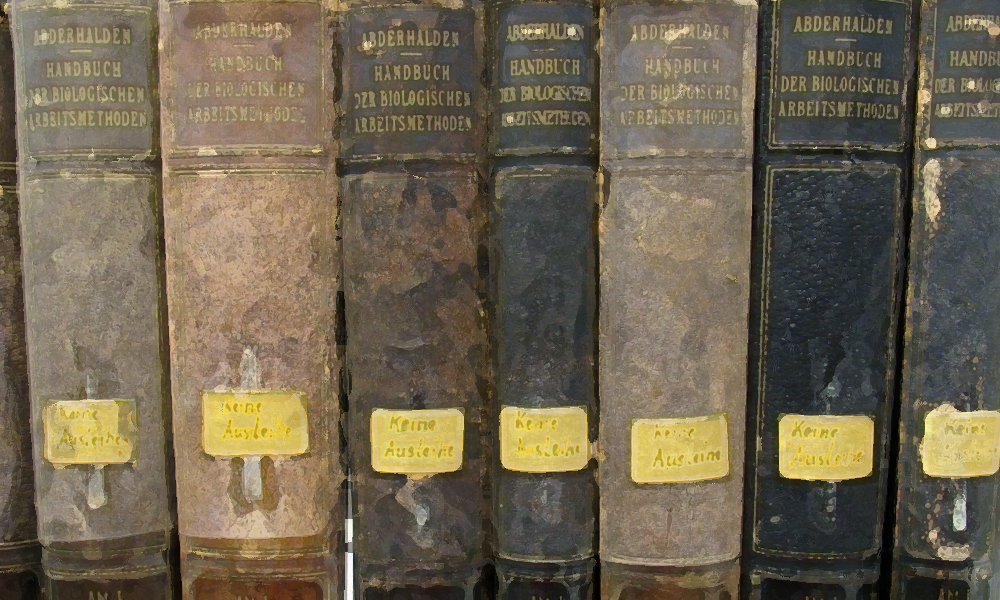
Mathias Grote is a historian of science with a background in philosophy and biology. He has held research positions at the MPI for the History of Science or the University of Exeter, and is now at the assistant professor level at Humboldt University Berlin. In his current project, he investigates the role of unhandy handbooks in 20th century science, that is, encyclopedic compendia. The “science of the handbooks” (Handbuchwissenschaft, in Ludwik Fleck’s words) involves scientists reading and writing, compiling and editing, and thereby maintaining and re-shaping knowledge deemed canonical for a field. This may appear as a rather untypical aspect of science. However, understanding how science has dealt with floods of new knowledge is important in a time when digitalization revisits many aspects of publishing, communicating, using and referencing knowledge.
Thijs Hagendijk, a PhD candidate at Utrecht University, studies the historical use and function of early modern artisanal manuals, recipes and other how-to treatises in the visual and decorative arts. Special attention is given to the fields of early modern gold- and silversmithing, painting and glassblowing. Additionally, he explores the use of experimental methods in the history of art, technology and science as a way to access the material and tacit dimensions that lay behind these technical texts. Previous to his current position, Thijs studied chemistry, philosophy and graduated in the history of science.
Hansun Hsiung combines methods from book history and media studies to address fundamental problems in the global history of knowledge. His book manuscript, Learn Anything!: Cheap Pedagogical Print and the Education of the Modern World, examines networks for the reprinting and translation of cheap texts that circulated knowledge between East Asia and western Europe ca. 1780-1870. Hsiung is also at work on an edited volume on “compression” as a virtue in communications and information management systems, a second monograph on the prehistory of stock image banks, and, most recently, matchmaking practices as a history of data. He studied at Yale, the University of Tokyo, and Harvard. His research has been supported by the American Historical Association, the Association for Asian Studies, Fulbright, and the Andrew W. Mellon Foundation. He is currently a Postdoctoral Fellow in Department II of the Max Planck Institute for the History of Science.
Axel Hüntelmann, PhD, MA, MBA studied modern history, medieval history, and political sciences at Humboldt University in Berlin and business administration at the University of Applied Sciences in Vechta. He has worked and published on the German Imperial Health Office (PhD 2007) and other European public health institutions between 1850 and 1950; the history of laboratory animals; a biography on the immunologist Paul Ehrlich; and serum and vaccine regulation in the Germany and France. From 2011 to 2014 he had been assistant professor at the Institute for the History, Philosophy and Ethics of Medicine at Mainz University and from 2014 to 2017 he worked at the Institute for the History of Medicine at the Charité in Berlin, where he is currently guest researcher and finishing a book on accounting and bookkeeping in medicine (1730-1930).
Susanne Jany received a Master of Arts degree in Cultural History and Theory at Humboldt University Berlin in 2012. From 2012 to 2015 she held a scholarship from the PhD-Network Das Wissen der Literatur at Humboldt University within which she began working on her dissertation project Process Architectures: Organizing Work with Architectural Means between 1880 and 1936 (finished in 2017). The thesis examined a novel concept in late nineteenth century architecture that allowed thinking spatial layouts of functional buildings in close relation with the workflows executed within them. In 2013 she was a visiting scholar at Harvard University. Since 2015 she works as a research assistant at the Cluster of Excellence Image Knowledge Gestaltung: An Interdisciplinary Laboratory and since 2016 at the Department of Cultural History and Theory at Humboldt University Berlin.
Boris Jardine is a Leverhulme Early-Career Research Fellow at the University of Cambridge (Department of History and Philosophy of Science/Whipple Museum). His research project is entitled ‘The Lost Museums of Cambridge Science, 1865–1936’, which offers the first history of Cambridge’s ‘New Museums Site’. This was home to a wide range of museums before these were demolished to make way for ever more laboratory facilities. Jardine has also previously held the Munby Fellowship in Bibliography, Cambridge University Library, and worked as a Curator at the Science Museum, London. Research in those two posts focused on scientific instruments, specifically the history of the trade in instruments, and the role of instrument manuals in technical instruction.
Charles Kollmer concentrates on the history of the modern biological sciences. His dissertation, From Elephant to Bacterium: Microbial Cultures and the Chemical Order of Nature, 1912-1946, looks at how microbial cultures became invaluable tools for comparative physiological studies of life at its smallest. The dissertation reconstructs the career paths and benchwork of microbiologists in Germany, Czechoslovakia, the Netherlands, Great Britain, France and the United States. Before coming to Princeton, Charles Kollmer earned a B.A. in English literature from Williams College and an M.A. in interdisciplinary humanities and social thought from New York University.
Evangelos Kotsioris is an architectural historian whose research focuses on the intersections of architecture with science, technology and media. His PhD dissertation at Princeton University composes an architectural history of computerization during the Cold War and has received the Carter Manny Citation for Special Recognition by the Graham Foundation. He has been a travelling fellow of the Society of Architectural Historians and a graduate fellow of the Princeton Institute for International and Regional Studies. His writing has appeared in edited volumes and periodicals such as Perspecta: The Yale Architectural Journal, Harvard’s New Geographies, The Architectural Review, Volume, Manifest and elsewhere.
Reinhild Kreis is Assistant Professor at the University of Mannheim. Her research focuses on the history of consumption, German-American relations, protest history, and the history of emotions. She earned her doctorate in 2009 at the LMU in Munich. In 2015/16 she was a Lise Meitner Fellow at the Institute for Economic and Social History at the University of Vienna, and in 2013/14 she was Visiting Fellow in the History of consumption at the German Historical Institute in Washington, D.C. Her current project is on household production and consumption from the 1880s to the 1980s.
Elaine Leong leads the Minerva Research Group “Reading and Writing Nature in Early Modern Europe” at the Max Planck Institute for the History of Science, Berlin. Her research focuses on the production and transmission of vernacular knowledge in early modern Europe. She is the co-editor of Secrets and Knowledge: Medicine, Science and Commerce 1500-1800 (Ashgate, 2011) and “Testing Drugs and Trying Cures in Medieval and Early Modern Europe” (Bulletin of the History of Medicine, Special Issue 2017). Her monograph Recipes and Everyday Knowledge: Medicine, Science and the Household in Early Modern England will be published by the University of Chicago Press in 2018.
Federico Marcon is a specialist of early modern Japan. His interests lie in the interaction of intellectual, social, economic, and political dynamics in the formation of cognitive practices and philosophical discourses. After his PhD from Columbia University, he joined Princeton in 2011. His The Knowledge of Nature and the Nature of Knowledge in Early Modern Japan is a social and intellectual history of the creation, developments, institutionalization and disappearance of a field of natural history in Tokugawa Japan. He is working on two projects: an intellectual history of money in Tokugawa Japan and a conceptual history of the word “fascism.”
Matteo Martelli is associate professor in History of ancient science at the University of Bologna, where he arrived after spending several years as research associate in Philadelphia (Chemical Heritage Foundation) and Berlin (Humboldt University and Berlin-Brandenburg Academy of Sciences and Humanities). He is currently PI of the ERC project (Consolidator Grant; 2017-2022) Alchemy in the Making: From ancient Babylonia via Graeco-Roman Egypt into the Byzantine, Syriac and Arabic traditions (1500 BCE – 1000 AD). His main research interests are Greek and Byzantine science (alchemy and medicine in particular) and its reception in Greek and Arabic.
Michael McGovern began his PhD in Princeton’s Program in the History of Science in 2016. He has studied the history of technology and the life sciences in various settings, focusing on the history of genetics as an information science in both his undergraduate thesis at the University of Chicago and master’s dissertation at the University of Cambridge, which was awarded the 2014 Hans Rausing Prize. He is currently thinking about computing, demography, and marketing in the 1970s United States.
Anna-Maria Meister pursues a joint PhD degree in the History and Theory of Architecture Program and the Council of the Humanities at Princeton University. Her dissertation From Form to Norm: The Systematization of Values in German Design circa 1922, 1936, 1953 focuses on the production and dissemination of norms and normed objects as social desires and institutional values. She is currently a fellow at the Max-Planck Institute for History of Science, Berlin. Her writing has been published in Harvard Design Magazine, Volume, Uncube, Baumeister, Arch+ and as a book chapter in Architecture and the Paradox of Dissidence (Routledge, 2013), and was featured at the Lisbon Triennial (2013), the 14th Venice Biennial (2014) and the 7th Warsaw “Under Construction” Festival (2015).
Matthew Melvin-Koushki (Ph.D. Yale) is Assistant Professor of History at the University of South Carolina. He specializes in early modern Islamicate intellectual and imperial history, with a focus on the theory and practice of the occult sciences in Timurid-Safavid Iran and the wider Persianate world to the 19th century.
Staffan Müller-Wille is Associate Professor in the History and Philosophy of the Life Sciences at the University of Exeter (England). His research covers the history of the life sciences from the early modern period to the early twentieth century, with a focus on the history of natural history, anthropology, and genetics. Among more recent publications is a book co-authored with Hans-Jörg Rheinberger on The Gene: From Genetics to Postgenomics (2018) and two co-edited collections on Human Heredity in the Twentieth Century (2013) and Heredity Explored: Between Public Domain and Experimental Science, 1850–1930 (2016).
Jennifer M. Rampling is a historian of medieval and early modern science and medicine, specialising in alchemy. She is Assistant Professor of History at Princeton, where she teaches on the Program in History of Science, and is also a faculty member of PRISM (the Princeton Institute for the Science and Technology of Materials). Her research uncovers the strategies used by alchemists over four centuries to decipher and reconstruct chemical practices, especially in England. She is currently completing her first book, The Making of English Alchemy, and embarking on a new project that investigates early modern representations of chemical change, partly based on laboratory reconstructions of early alchemical practices.
David Robertson is a third-year graduate student in Princeton University’s History of Science Program. Robertson is broadly interested in the history of the human sciences. More specifically, he studies the history of cross-cultural engagements in the mind sciences. In 2013, he completed a history masters at the University of Sydney on the history of psychiatrists working with Aboriginal people in the 1960s. Currently, he is conducting archival research on the history of global psychiatry in the postwar era. His dissertation project is entitled ‘Schizophrenia and Decolonization: A History of Postcolonial Psychiatry.’
Alrun Schmidtke is a doctoral candidate at the chair for the history of science at Humboldt-Universität zu Berlin where she focusses on scientists’ roles as publishing advisers in science publishing up until the 1960s. She is a fellow of the Gerda Henkel Foundation and has held scholarships from the German National Academic Foundation, the Thyssen Foundation, and the German Historical Institute in London. Alrun Schmidtke has studied history of science at Technische Universität Berlin and Humboldt-Universität zu Berlin whilst working as a research assistant at the Max Planck Institute for the History of Science. She graduated with a thesis on expository conflicts of industrial and trade exhibitions in the late 19th century. Her current research is based on a variety of publishers’ archives, including Springer, Wiley, and Oxford University Press, among others.
Isabelle Schuerch is Senior Lecturer for Medieval History at the University of Bern. From 2015 to 2017, she was Senior Researcher in the DFG-funded Reinhart Koselleck project “Societalisation among participants and their transformation . A history of society and theory of the European early modern period.” (Prof. Dr. Rudolf Schlögl). Her main research interests include historical human and non-human forms of relationship, practice theories and the history of mediality and materiality.
Pamela H. Smith is Seth Low professor of history at Columbia University, and founding Director of the Center for Science and Society and of its cluster project The Making and Knowing Project. Her articles and books, especially The Body of the Artisan (2004), examine craft and practice, most recently, in From Lived Experience to the Written Word: Recovering Skill and Art (under review) and in the edited volumes Ways of Making and Knowing (ed. with Amy R. W. Meyers and Harold Cook, pbk 2017); and The Matter of Art (ed. with Christy Anderson and Anne Dunlop, pbk 2016). An edited volume, Entangled Itineraries: Nodes of Material Convergence across Eurasia (forthcoming), deals with the movement of material across Eurasia before 1800. In a collaborative research and teaching initiative, The Making and Knowing Project, she and the Making and Knowing Team investigate the intersection of craft making and scientific knowing by text-, object-, and laboratory-based research on the technical and artistic recipes contained in a sixteenth-century French manuscript.
Liat Spiro is a PhD candidate in History at Harvard University with interests in the histories of labor, technology, design, and development. She is currently completing a dissertation entitled “Drawing Capital: Depiction, Machine Tools, and the Political Economy of Industrial Knowledge, 1824-1914,” which uses industrial firm archives, technical print culture, and patent records to offer a social, legal, and visual history of the reformatting of mechanic knowledge. This work analyzes the role of changing drafting practices and other depiction technologies in recasting divisions of labor, claims to intellectual as industrial property, and international trade dynamics within the capital goods industries of the U.K., U.S., and Germany. Her second project will explore the relationship between large-scale civil engineering projects and the making of international financial architectures from the 1870s to 1950s, tracing how the material construction of infrastructure formed ideas of economic space, developmental time, and social governance.
Eveline Szarka is a Ph.D. candidate at the University of Zurich and a member of the doctoral program in the Department of History, where she also teaches undergraduate modules. She received her B.A. in History and German Philology from the University of Zurich and her M.A. in German Philology and Medieval Studies from the University of Zurich and Cambridge. She is currently working on a dissertation on the semiotics of ghosts and spirits in early modern Switzerland. Her research interests include historical semiotics and pragmatics, Reformation history, and history of the media.
Umberto Veronesi is a Ph.D. candidate at the Institute of Archaeology, University College London. His dissertation entitled, “The archaeology of laboratory experiments and early chemistry: Oxford to Jamestown and back” focuses on exploring the practice of alchemy through the lenses of the archaeological materials coming from early chemical laboratories and uses scientific archaeology as a means to inform historical research and questions. Veronesi received his BA in Archaeology from the Sapeinza Universita di Roma in 2013, and his MSc Technology and Analysis of Archaeological Materials from the Institute of Archaeology, University College London in 2014.
Kerstin von der Krone is a research fellow at the German Historical Institute Washington DC. Her fields of research include Jewish history in Central Europe in the modern era, the history of Jewish thought and scholarship, and the history of Jewish press. Her current research project explores the transformation and formation of Jewish education and Jewish knowledge in nineteen-century Central Europe. She is co-editor of the GHI blog project History of Knowledge: Research, Resources, and Perspectives.
Xue Zhang is a Ph.D. candidate in the Department of East Asian Studies, Princeton University. Her dissertation explores how a rich body of geographical knowledge regarding Xinjiang was generated and disseminated across Qing China from the 1750s to 1870s, and how the new scholarship profoundly impacted high politics.